Wildlife and birds
• Blue Sheep, Himalayan Thar, Himalayan Asian Black Beer, Snow Leopard, Red Panda, Yellow throated martin
• 7 Species of Snake, 4 species of lizard, 15 amphibian species, 21 fish species (Bitter fish- native), 83 species of insects
• 618 species of birds are recorded
• Golden-breasted fulvetta (species of songbird), Snow cock, Red-billed chough (Crow family), Danfe, Monal
• 33 species of migratory bird
Vegetation
1. Sub-tropical evergreen forest (800- 1200m)
Evergreen tree species characterized by schima wallichii (chilaune), engelhardtia spicata (Mauwa) and castanopsis indica (Dhale katus) are found in this forest. However, much of the natural forests have been converted into agriculture land.
2. Lower Temperate Forest (1,200-2,500m)
It is also known as Lower Temperate Mixed Broadleaf Forest. It is home to broadleaf deciduous trees dominated by quercus (Katus, oak), castanopsis (Dhale katus, patale katus), rhododendron arboretum (lali gurans) and some members of the laurel family. Trees shed their leaves in the spring as a result of drought stress.
3. Upper Temperate Forest (2,500-3,500m)
It is also called Upper Temperate Mixed Forest or Temperate Cloud Forest. There is a floristic influence from both lower and higher zones. Here, deciduous oaks, maples, laurels and birches intersperse with evergreen firs, magnolias, junipers and rhododendrons. Most trees are deciduous. Trees are covered by mosses and epiphytic plants due to high moister content in this zone. Daphne bholua (locally known as lokta) is harvested from these forests.
4. Sub-alpine Zone (3, 500-3,900m)
Mostly evergreen conifers are interspersed with few cold-hardy deciduous species. South-facing slopes are usually tree-less or contain pure stands of stunned rhododendrons. North-facing slopes have juniper, fir, willow, birch and rhododendrons. In Ghunsa valley, look out for extensive stands of the spectacular Himalayan larches (larix griffithiana) that turn the hillsides a golden-yellow in the fall.
5. Alpine Zone (3,900-4,600m):
Woody vegetation in this zone of moist alpine scrub consists of stunned junipers, roses and rhododendron, gentian and saxifrange abound. Hardy alpine grasses include carex, juncus and poa. Look out for herds of blue sheep foraging on hillsides above tree line. Perhaps, you may see signs of snow leopard that preys on these sheep.

TRANSPORTATION

ACCOMODATION
One of our representatives will pick you up at the airport to accompany you to the hotel. Depending on the arrival time we will meet in the hotel for the briefing of the entire upper mustang trip itinerary.
ACCOMODATION

MEAL
TRANSPORTATION
First the 45 minutes flight towards Bhadrapur offers a beautiful view of mountains and valleys. After reaching Bhadrapur we will take Jeep toward Taplejung. After sometimes, we will reach Ilam the capital city of tea. The ways offer a beautiful view of the tea gardens. Today we will pass many hills and if the weather is nice there is view of the Kanchenjunga range on the way. After driving 9 hours we will reach Mitlung.
ACCOMODATION

DISTANCE

DURATION

ELEVATION
TRANSPORTATION
MEAL
The trail winds alongside the Tamor River, where the elusive Ghoral might grace the path with its presence. Beyond Tapethok—where the wilderness truly begins—we’ll wander through fragrant cardamom fields, the air sweet with spice, as distant waterfalls cascade down emerald slopes. A bridge marks the transition, leading us to Sekathum, where the first whispers of Sherpa hospitality welcome the weary traveler.
MEAL
ACCOMODATION
DISTANCE
ELEVATION
DURATION
Today, our path follows the whispering currents of the Ghunsa River, where waterfalls glisten like silver threads against the cliffs. The trail leads us deep into the embrace of the forest, dappled in shadow and light, before rising gently toward Amjilosa. With each step, the world unfolds—valleys stretch below, vast and verdant, as the mountains breathe around us. At journey’s end, Amjilosa awaits, a quiet haven where only tea houses stand, warm with the promise of rest and steaming cups beneath the endless sky.
MEAL
DISTANCE
ELEVATION
DURATION
ACCOMODATION
The path today winds through a primordial tapestry of towering bamboo groves, ancient pines, and gnarled oaks, their branches draped with lichen. Rhododendrons burst in sporadic flashes of crimson and white, as if the forest itself is alive with hidden fire. All the while, the Ghunsa River murmurs beside us, its icy waters carving through the wilderness.
As we press deeper, the woods grow denser—the air thick with the scent of damp earth and pine resin. Sunlight fractures through the canopy, casting shifting patterns on the moss-cloaked trail. At last, Gyabla emerges—a handful of weathered houses clinging to the mountainside, a fleeting outpost of human presence in the heart of the untamed. Here, the forest breathes close, and the mountains watch in silent dominion.
ACCOMODATION
DISTANCE
DURATION
ELEVATION
MEAL
The morning begins beneath the cathedral canopy of old-growth forest, where shafts of light pierce through like golden spears. But the true revelation comes as we ascend toward Phale—the remnants of an old Tibetan camp—where the world abruptly transforms. At 3,000 meters, the air thins, and the flora shifts: twisted rhododendrons, their gnarled limbs heavy with blossoms, stand sentinel among stoic pines. The trail, now etched with spirituality, winds past weathered mani walls, their carved mantras humming with centuries of devotion, and chortens that seem to rise from the earth like silent prayers.
Then—Ghunsa. A cluster of sturdy Sherpa homes, their wooden beams darkened by time, clings to the valley. Potato fields terrace the slopes in emerald steps, and smoke curls from the chimneys of rustic lodges. Here, life moves to the rhythm of the high Himalayas. With barely 200 souls, the village is a living museum of resilience—where the clatter of yak bells and the murmur of ancient dialects tell stories no book could hold. Today, the mountains did not just show us their grandeur; they let us step, however briefly, into the world of those who call them home.
ACCOMODATION
MEAL
Dawn breaks crisp over Ghunsa as we prepare for our acclimatization climb—a necessary dance with altitude. The trail rises sharply behind the village, each switchback revealing ever-grander vistas: Ghunsa's clustered roofs and potato fields shrink below, while the valley unfurls like an ancient parchment, its folds carved by glacial hands.
The thin air bites at our lungs as we gain elevation. At the viewpoint, the high path to Selele Pass comes into focus—a serpentine line etched across scree slopes, beckoning toward higher realms. Here, the world opens in a breathtaking panorama: the valley plunges dramatically, framed by snow-capped sentinels that have stood watch for eons. This is no mere training walk—it's a communion with the mountains, preparing body and spirit for the trials ahead.
DISTANCE
ELEVATION
MEAL
DURATION
ACCOMODATION
The march begins through silent corridors of ancient pine, their gnarled roots gripping the steep slopes like old men's fingers. Rhododendron sentinels stand draped in lichen, their twisted branches whispering of winters past. Beyond Ghunsa's last wooden smokehouse, civilization falls away—only the occasional stone teahouse breaks the wilderness, their chimneys puffing precious warmth into the thin air.
Then, the valley's grand reveal—a sudden parting of the forest curtain. The north face of Jannu (Khumbhakarna) erupts from the earth, a 3,000-meter tsunami of ice and black rock that steals the breath. The mountain doesn't simply stand; it looms, its seracs glinting like shattered glass against the azure sky.
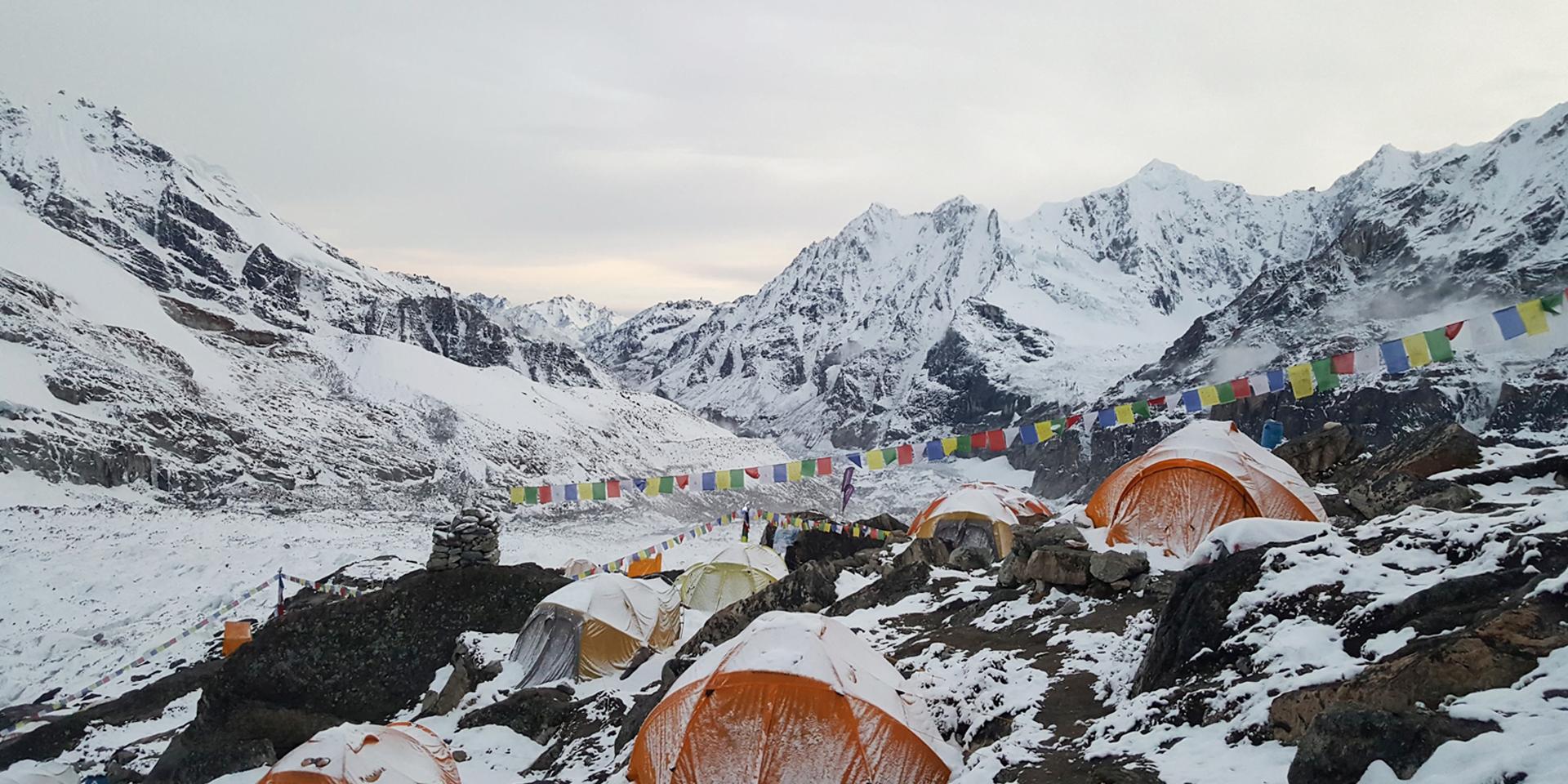
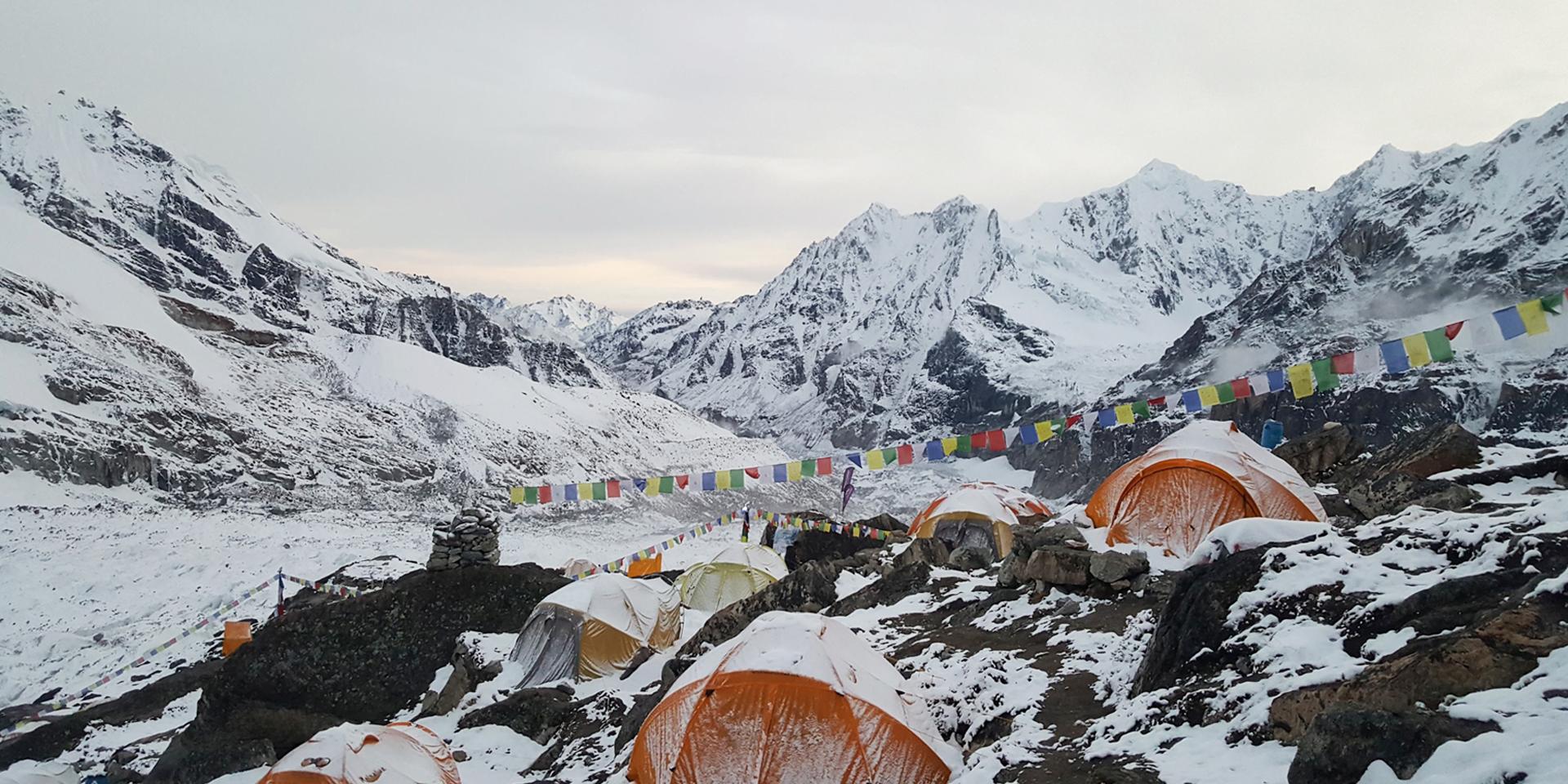
Kambachen arrives as a rough-hewn reward. Here, where the moraine meets the sky, the full theater of giants unfolds—Jannu's fang-like summit, the sweeping ridges of Sapru, their glaciers groaning under the weight of millennia. The tea tastes of smoke and iron, the fire crackles with resinous pine, and the mountains... the mountains do not care that we are here
MEAL
ACCOMODATION
DISTANCE
DURATION
ELEVATION
Khumbhakarna—known to climbers as Jannu—is not just a mountain. At 7,710 meters, its sheer granite west face is one of the most intimidating walls in the Himalayas. But before one can even dream of scaling it, the approach to its base camp is an expedition in itself. This is the tale of that journey—a test of endurance, patience, and raw connection with the wild.
DISTANCE
ELEVATION
MEAL
ACCOMODATION
DURATION
The morning breaks crisp and clear, revealing a horizon jagged with ice and stone. With each step forward, the Himalayas unfold like pages of an ancient tome—their stories written in glaciers and crumbling rock.
The path ahead snakes through a realm of giants. To the east, the Kanchenjunga massif looms supreme, its five-headed crown glinting in the dawn light. But it is Jannu (Khumbhakarna) that commands attention—its sheer north face a fortress of blue ice and granite, daring climbers to even dream of an ascent.
The trail is alive with peril and wonder:
As we climb higher, the panorama sharpens:
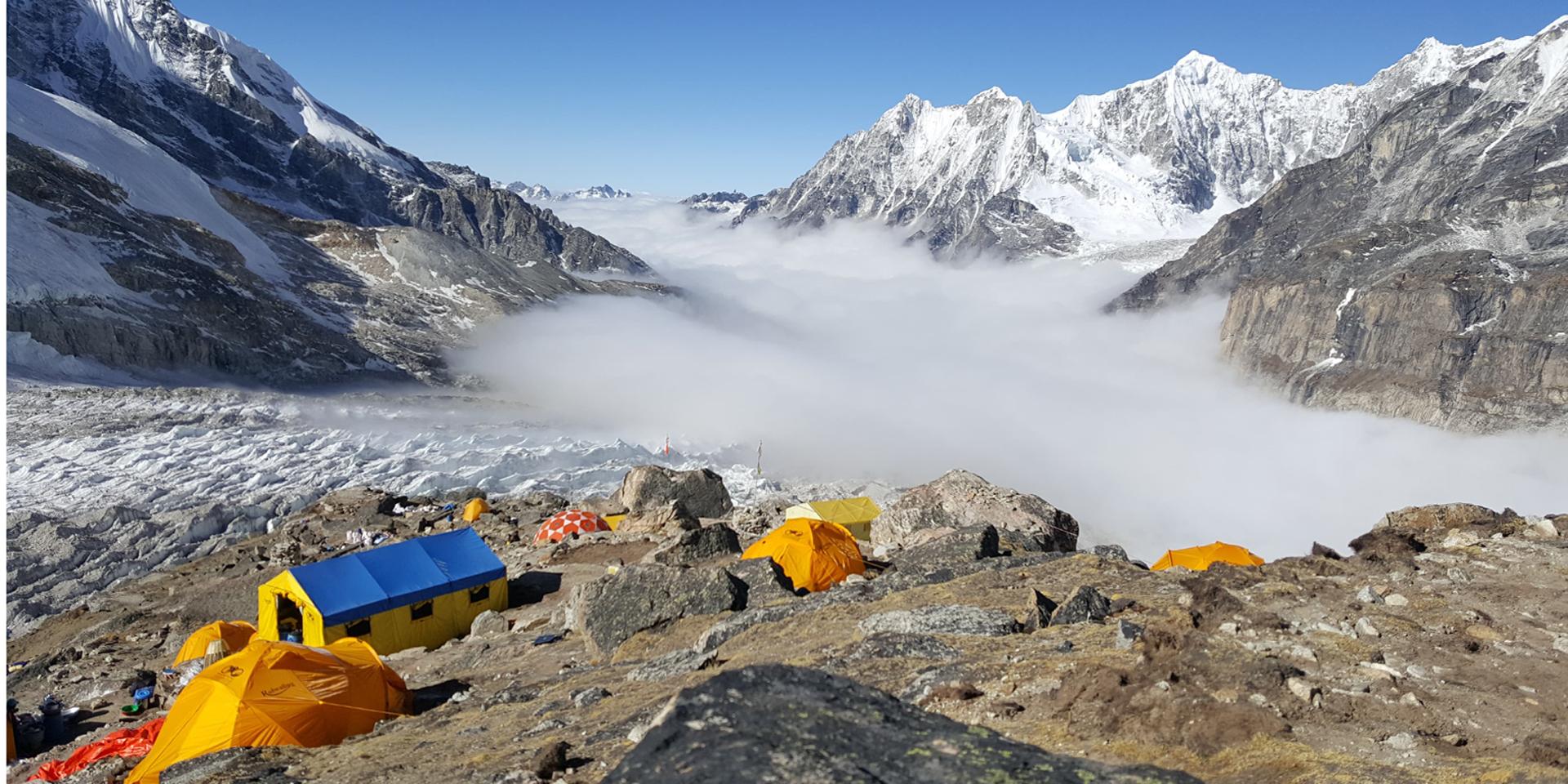
By midday, we reach Lhonak—a barren outpost cradled by glaciers. Here, the world feels half-frozen in time. Turquoise icy lakes reflect the surrounding peaks, their surfaces cracked like old porcelain. The wind carries the groan of distant seracs calving.
DISTANCE
ELEVATION
MEAL
ACCOMODATION
DURATION
The morning sun casts long shadows across our makeshift camp as we break our fast on strong black tea and tsampa. The air bites with each breath – a reminder that today we walk into the domain of giants.
With crampons biting into blue ice, we begin our traverse along the northern ridge of the glacier, a precarious path between heaven and earth. To our left, the glacier falls away into yawning crevasses, their depths humming with ancient cold. To our right, the mountains stand sentinel – Jannu's north face scowling down at us mere mortals daring to tread this frozen world.
We move deliberately, each step measured not just for safety but to drink in the impossible views:
By midday, we reach our prize – the North Base Camp. Here, at the roof of the world, the full majesty of Northern Kanchenjunga reveals itself. The mountain doesn't simply stand – it hangs above us, its glacier a frozen waterfall of ice cascading from the summit. The air is so still we can hear the glacier's voice – the creak and groan of moving ice, the occasional thunder of a distant avalanche.
As the afternoon wanes, we turn back toward Lhonak, shadows stretching long across the glacier. The descent feels like leaving a sacred place – backs turned to the mountain, but its presence still heavy on our shoulders.
DISTANCE
ACCOMODATION
DURATION
ELEVATION
MEAL
After weeks of fighting gravity, today the mountain finally releases its grip. We turn our backs to the high snows and begin the long descent to Ghunsa – our knees singing hymns of gratitude with each downward step.
The trail unfolds like a reverse altimeter:
Yet the mountains refuse to let us go easily. With every switchback, the Kanchenjunga massif reveals new profiles – each more dramatic than the last. The perspective shifts like a rotating diorama:
By midday, the trail softens underfoot. The crunch of moraine gives way to the spongy give of alpine turf. We pass shepherds' huts, their stone walls moss-covered and ancient. The sound of running water becomes constant – no longer frozen in silence.
Ghunsa at dusk:
Woodsmoke curls above the slate roofs as we enter the last outpost of civilization. The air feels thick with oxygen, almost intoxicating after the thin atmosphere of the high camps.
ACCOMODATION
MEAL
ELEVATION
DISTANCE
DURATION
The morning in Ghunsa (3,475m) dawns with woodsmoke curling through frosted air. This Tibetan-style village, with its slate-roofed homes and intricately carved mani walls, marks civilization’s final stand before the wilderness reclaims the land. We shoulder our packs, heavier now with fresh supplies—potatoes, dried yak meat, and a precious block of butter for tea. The trail ahead to Amjilosa (2,308m) promises a brutal descent—over 1,100m lost in just 12km—through a valley forgotten by time.
Ghunsa to Phale (2,950m) | 3 hours
The path plunges immediately, zigzagging down a steep, forested ridge. The roar of the Ghunsa Khola grows louder, its milky glacial waters churning through a V-shaped gorge. The air thickens with moisture; moss swallows ancient boulders. Here, the remnants of old landslides lurk—some recent enough that fresh scars of dirt slice through the greenery.
At Phale, a cluster of abandoned herder huts leans precariously over the river. The only signs of life: a faded prayer flag and the distant clank of a goat bell. We pause on a lichen-crusted boulder, watching mist curl up from the valley below like steam from a cauldron.
Danger Points:
2.5 hours | Rhododendron Forests & Forgotten Shrines
The forest closes in—a tunnel of old-growth rhododendrons, their gnarled branches draped with beard lichen. Sunlight filters weakly through the canopy, dappling moss so thick it muffles footsteps. This is a place out of time:
At Gyabla (marked on some maps as "Phumpe"), a single teahouse appears like a mirage. The owner, a toothless Gurung woman, serves us tongba (millet beer) in wooden mugs. "Few come this way now," she says, pointing south. "The new trail to Taplejung is easier. This path is for ghosts and stubborn men."
3 hours | 400m Descent | The River’s Edge
The trail becomes a narrow ledge carved into the valley wall, the Ghunsa Khola frothing below. In places, we crab-walk over sections where the path has crumbled into the abyss. The humidity rises; leeches appear on wet rocks, sensing warmth.
Then, abruptly, the valley widens. Amjilosa emerges—a handful of bamboo huts clinging to a terraced hillside. The air is heavy and warm, buzzing with cicadas. After weeks in the high cold, the scent of earth and fermenting rice is almost overwhelming.
The village is a liminal space—neither Tibetan nor lowland Nepali, but something in between. The people here are Limbu, their language a world away from the Sherpa dialects of Ghunsa. Chickens scratch in the dirt; a group of children stare at us with wide eyes.
ACCOMODATION
DISTANCE
MEAL
DURATION
ELEVATION
TRANSPORTATION
From Jungle Mist to Motor Roads
The predawn chorus of cicadas and crowing roosters shakes us from sleep in Amjilosa (2,308m). The air hangs thick with moisture, our gear already damp from the night’s humidity. Today’s mission: descend through the last wild stretch of the Ghunsa Khola gorge to Sekathum, then surrender to the jarring embrace of a 4WD vehicle back to Taplejung. The transition from trekking to road travel feels like stepping through a portal between centuries.
ACCOMODATION
MEAL
TRANSPORTATION
Today’s mission: the grueling 8-hour drive to Bhadrapur, then a winged escape to Kathmandu. The transition from trekker to passenger feels like being spit out by the mountains into a world that moves too fast.
ACCOMODATION
MEAL
We will explore the historically and culturally rich Kathmandu Valley. Highlights include leisurely tours of Swayambhunath Temple (also known as Monkey Temple), Bauddhanath, Pashupatinath Temple, and Durbar Square. After several days in the mountains, we can soak in these iconic sites that represent the essence of Kathmandu and the heritage of Nepal.
TRANSPORTATION
Prior to your flight time you will be dropped to the airport.
Departures in the Himalaya are never clean breaks. The mountains release you gradually - first from their sight, then from their thin air, finally from your own bloodstream. We may be rolling toward airports and emails, but part of us remains frozen in place, waiting for the next call to climb.