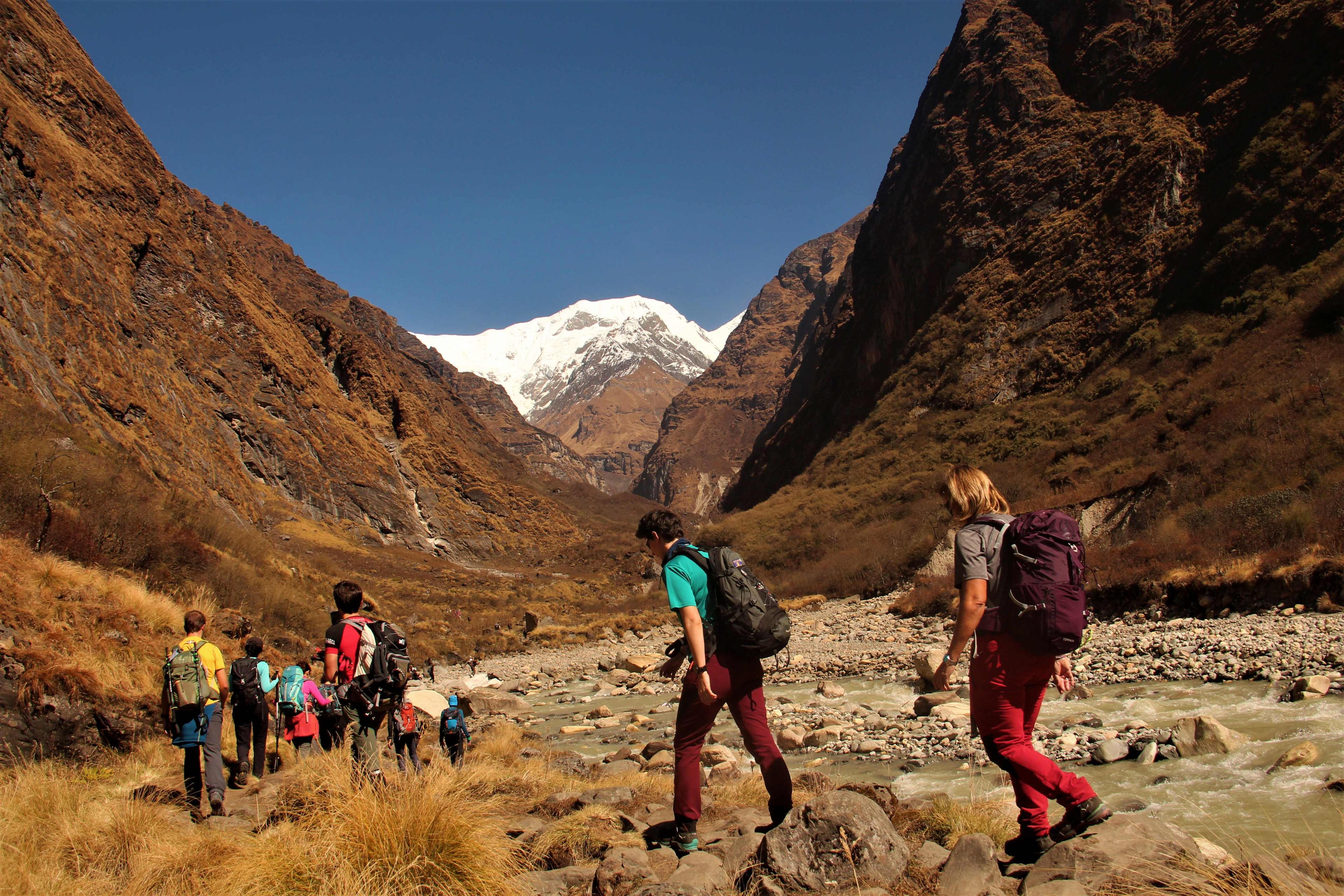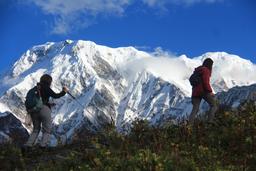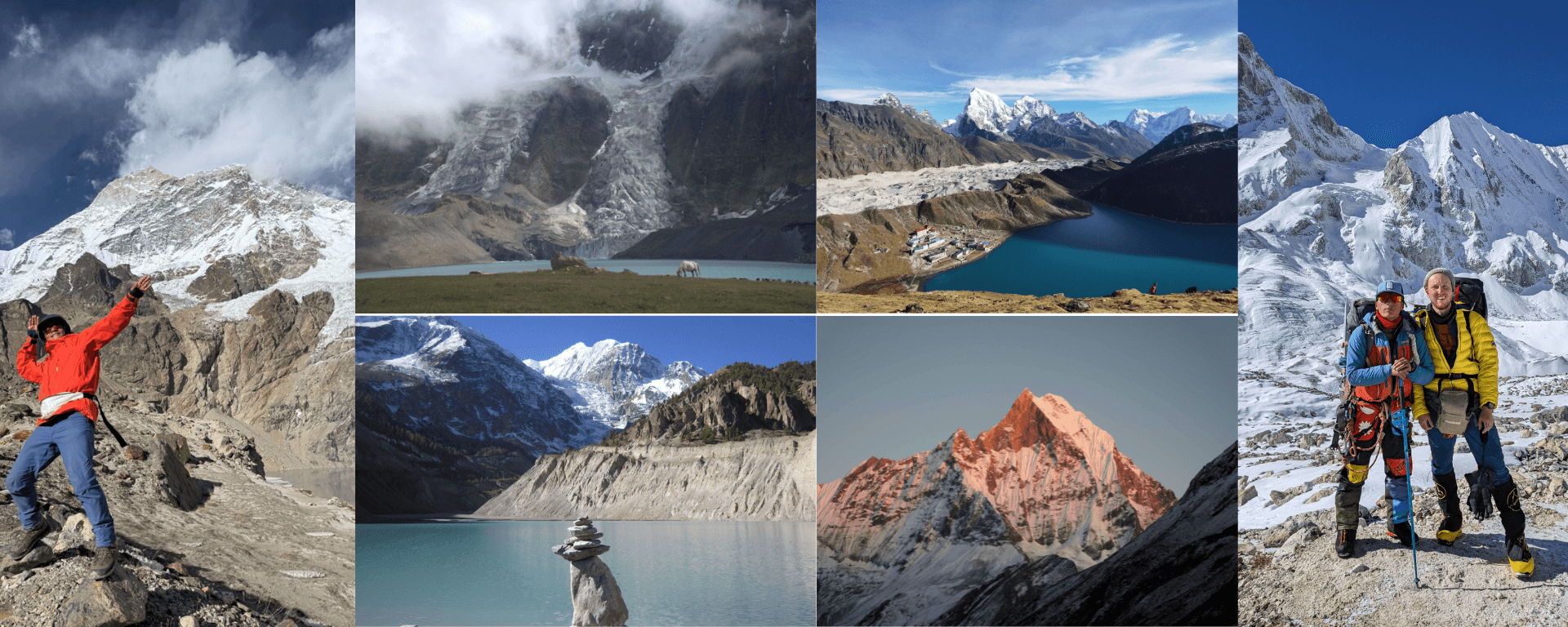
This Great Himalayan Trail offers a once-in-a-lifetime journey across Nepal’s entire Himalayan belt, traversing diverse terrain from subtropical forests and terraced hillsides to alpine valleys, glaciers, and high-altitude deserts. The route passes through remote villages, ancient monasteries, and culturally rich settlements inhabited by various ethnic communities.
The trail is divided into two main routes: the High Route and the Low Route. The High Route follows the spine of the Himalayas and includes multiple technical passes above 5,000 meters, making it physically demanding and suitable for experienced trekkers and endurance athletes. The Low Route travels through mid-hill regions, offering a more cultural experience while still showcasing stunning mountain scenery.
HIGH ROUTE
Region: All Region
Grade: Extreme (Expeditio Grade)
Max Altitude: 6,143m (West col)
Total Elevation Gain: 120,000–150,000m
Total Walking Distance: Approx. 1,700 km
Total Duration: 120 Days (100+ trek, 2 passes over 6000m & 18 passes over 5000m
The Great Himalaya Trail (GHT) High Route in Nepal represents the pinnacle of long-distance trekking, tracing the highest and most remote path possible along the roof of the world. Spanning approximately 1,700 kilometers (about 1,056 miles) from the far eastern Kanchenjunga region to Hilsa in the far west on the Tibetan border, this is not a single, marked footpath but a dynamic corridor of ancient trade routes, animal paths, and off-trail traverses. Conceived and mapped by Robin Boustead between 2008 and 2009 after years of research, the route links together a matrix of trails, pushing the boundaries of traditional trekking. Unlike its lower counterpart that focuses on cultural immersion and easier conditions, the High Route is a genuine expedition for mountaineers, demanding that trekkers cross over 160 passes, many exceeding 5,000 meters, and navigate some of the most rugged and isolated alpine terrain on the planet.
Enduring the full traverse is a monumental test of human endurance, taking approximately 150 days to complete for those who succeed. The journey involves a staggering total elevation gain and loss of around 120,000 to 150,000 meters (up to 492,000 feet), constantly shifting from humid subtropical valleys to windswept high-altitude deserts and glacial moraines. The route is defined by its immense technical challenges, including a handful of "technical passes" like the Sherpani Col and Amphu Labtsa, which exceed 6,000 meters and require the use of crampons, jumars, and climbing harnesses on fixed lines. Combined with relentless isolation, unpredictable weather including sudden blizzards, and the constant risk of Acute Mountain Sickness (AMS), it is widely considered one of the hardest walking routes in the world, with fewer than 100 trekkers having ever completed the full route.
Beyond the physical conquest, the GHT High Route provides a unique and profound immersion into Nepal's cultural and natural soul. The trail passes through over 20 distinct ethnic zones, from the Rais and Limbus of the east to the Tibetan-influenced communities of Dolpo and the remote highlanders of the far west, where ancient customs have remained unchanged for centuries. This journey is also an incredible wildlife corridor, traversing protected areas that are home to endangered species such as the snow leopard, red panda, and Himalayan black bear. Undertaking the High Route is a life-defining expedition that demands months of meticulous planning, a budget exceeding basic trekking expenses, and the humility to yield to the mountains, offering those who persevere a transformative glimpse into the very spine of the Himalayas